

Quick answer: To get recruited for college baseball, build a realistic list of schools, keep your grades strong, make a short skills video, contact coaches directly with your stats and schedule, play where coaches can see you, and register with the right eligibility center. Many players also start at a junior college and transfer.
Key takeaways
- Start early, be honest about your level, and build a list that includes a mix of schools.
- Coaches recruit players they can see, so video and direct contact matter.
- Grades and eligibility paperwork can decide where you play. Check the NCAA, NAIA and CCCAA directly for current rules.
- Junior college is a real path. Coach Su’a’s West Los Angeles College teams sent more than 40 players on to four-year schools.
- Our full recruiting guide goes deeper on every step.
How does college baseball recruiting work?
College baseball recruiting is the process where college coaches find, evaluate and invite players to join their programs. The player’s job is to be easy to find and easy to evaluate. That means a clear profile, good video, strong grades, and direct contact with coaches who fit.
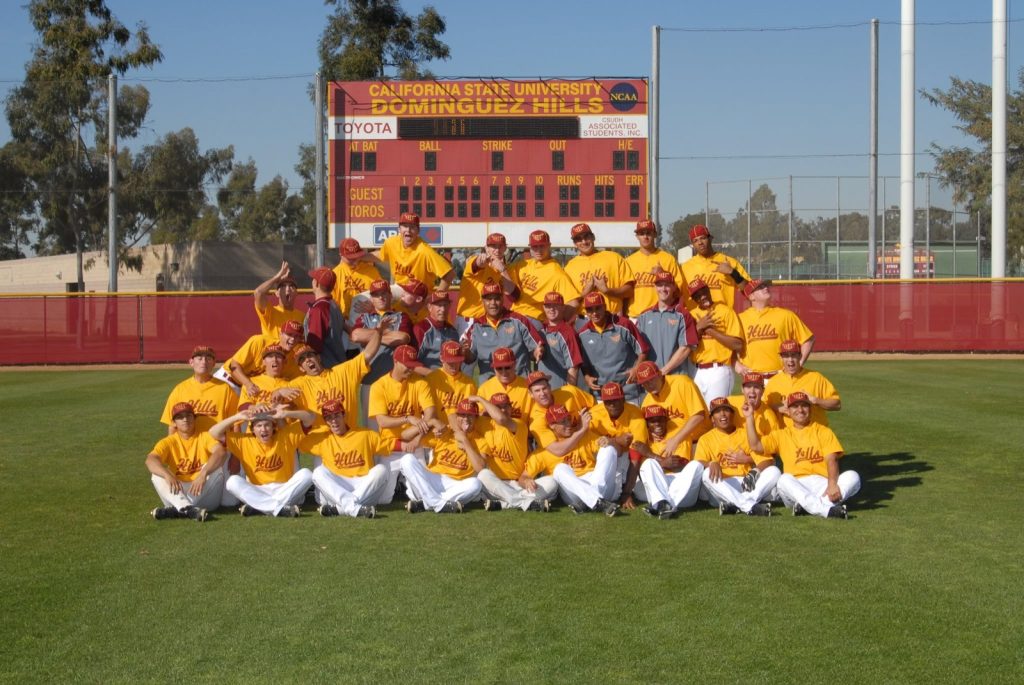
Coach Murphy Su’a has been on both sides of this process. He is a former NCAA Division I First-Team All-American at BYU and played in the Los Angeles Dodgers and Milwaukee Brewers organizations. He then coached for more than 40 years at the high school, college, professional and international levels. At Cal State Dominguez Hills, he built a nationally ranked NCAA Division II program and recruited and developed 21 MLB-drafted players.
This page is the answer-first summary. For a deeper walk through, read our college baseball recruiting guide.
Free for parents, coaches and players
Get the free drill pack
19 baseball and softball drills for hitting, fielding, throwing and pitching, plus a 60-minute practice plan. One printable PDF, sent to your inbox.
What are the steps to get recruited for college baseball?
- Know your level. Ask your high school or club coach for an honest opinion. Players who are realistic about their level find the right fit faster.
- Build a school list. Include a mix: a few reach schools, a few good fits and a few safe options. Think about the division level, the academics, the location and the playing time.
- Keep your grades up. Academics open doors and affect eligibility.
- Make a skills video. Keep it short and easy to watch. See the next section.
- Contact coaches. Send a short email with your video link, position, grad year, grades and schedule.
- Get seen. Play where coaches can watch you: your high school season, showcases and camps.
- Register for eligibility. Check the NCAA, NAIA and CCCAA directly for the current requirements.
- Visit and ask questions. Visit campuses when you can and ask about the roster, playing time and academics.
- Follow up. Coaches are busy. A polite follow-up shows interest.
What should a baseball recruiting video include?
A baseball recruiting video is a short clip that shows a coach who you are as a player. Coaches may only watch a minute or two, so lead with your best material.
- A title card with your name, position, grad year, height, weight, school and contact information.
- Hitters: several swings from the side and from behind, plus live at-bats if you have them.
- Pitchers: your fastball, off-speed pitches and delivery from the side and from behind the plate.
- Fielders: ground balls, throws from your position, and footwork.
- Runners: a run from home to first or a steal.
Use steady video, good lighting and a clear view of you. Skip fancy edits and music. A coach wants to see how you move. Keep the clip updated as you improve.
What do college coaches look for in a recruit?
College coaches look at skill, athletic ability, grades and character. They want players who are coachable, work hard and handle failure well. In baseball, a bad game is part of the sport, and coaches notice how a player responds.
Mental toughness and attitude count as much as tools. Our guide to the mental game of baseball explains how to stay steady under pressure. To prepare for evaluations and camps, see how players can prepare for baseball tryouts.
Is junior college a good path to a four-year school?
Yes. Junior college baseball is a proven path. A junior college lets a player develop, get more playing time and earn grades, and then move on to a four-year school. Coach Su’a was head coach at West Los Angeles College from 2017 to 2020, where more than 40 players moved on to four-year schools.
Junior college can be a good fit for players who need time to grow, improve their grades or get more exposure. Check with the California Community College Athletic Association (CCCAA) and with the four-year schools you want to attend to confirm how transfers and credits work.
How do four-year programs recruit players?
Four-year programs recruit through showcases, camps, high school games, video, coach recommendations and direct contact from the player. Many coaches also recruit from junior colleges because those players are more developed and have college game experience.
At Cal State Dominguez Hills, Coach Su’a built a nationally ranked NCAA Division II program and recruited and developed 21 MLB-drafted players. We encourage families to cast a wide net and not to focus only on the biggest names. The right program is one where the player can play, learn and graduate.
What about eligibility and scholarship rules?
Rules for eligibility, recruiting calendars and athletic scholarships differ across the NCAA, NAIA and CCCAA, and some have changed recently. We do not list numbers here because they can be out of date. Please check the official sources directly. For NCAA eligibility, start at the NCAA Eligibility Center. Your high school counselor can also help you plan your classes.
How does the pathway work for American Samoa student-athletes?
Coach Su’a coached the American Samoa national baseball team from 1998 to 2011, and DITR supports a pathway for these athletes. Learn more on our American Samoa student-athletes page.
How can a player improve before the recruiting process?
Coaches recruit players who keep improving. Work on your swing, throwing and fielding, and keep a training plan. Our guide to baseball swing mechanics and the guide on how to increase bat speed are good starting points. For one-on-one help, Coach Su’a works with high school, college and professional players through our player development program.
Frequently asked questions
When should a player start the recruiting process?
Earlier is better, but there is no need to panic. Start by keeping grades strong and playing at the best level you can. Check the NCAA, NAIA and CCCAA sites for current recruiting calendars, since rules and contact periods can change.
Do I need a recruiting service?
No. Players can contact coaches themselves with a short email and a video link. A coach wants to hear from the player. If you use a service, make sure you understand what it does and what it costs, and do not give up control of your own contact with coaches.
How many schools should I contact?
Build a list with a mix of reach, good-fit and safe schools. There is no perfect number. Write a personal message to each coach and mention why you are interested in that program.
What if I did not get recruited out of high school?
You still have options. Junior college, walking on at a four-year school, and attending showcases or camps are all possible routes. Many players find a path after high school by continuing to improve and staying in contact with coaches.
How do grades affect baseball recruiting?
Grades matter for admission and for eligibility. A strong academic record gives you more schools to choose from. Check the official eligibility requirements for the level you are aiming for, and talk with your school counselor.
Sources and further reading: NCAA Eligibility Center
Get a plan for your recruiting process
Read the full college baseball recruiting guide, or request one-on-one help through our player development program.