

Quick answer: Public speaking for teens is the skill of sharing ideas clearly and confidently in front of others. Teens build it by choosing one main point, organizing a simple outline, practicing out loud, slowing down and speaking often in low-pressure settings. Nerves are normal and shrink with repetition.
Key takeaways
- Public speaking is a skill, so confidence grows with practice, not with waiting to feel ready.
- Nerves are normal. Preparation and slow breathing make them manageable.
- A strong talk has one main point, three supporting points and a clear opening and ending.
- Short daily drills, such as a 30-second introduction, work better than one long rehearsal.
- If anxiety about speaking is severe or keeps a teen from school or activities, talk with a school counselor or pediatrician.
What is public speaking for teens, and why does it matter?
Public speaking for teens is the ability to share ideas clearly with a group, whether that is a class presentation, a team huddle, a club meeting or a job interview. It combines what you say, how you say it and how you carry yourself while you say it.
It matters because almost every area of life asks teens to speak up. Classroom presentations, college and job interviews, team leadership and community projects all reward the person who can explain an idea and be heard. It also pairs naturally with athletics. Captains and teammates who speak clearly can keep a group together, as we explain in leadership in sports.
The good news is that speaking is a set of small skills, and each one can be practiced.
Free for parents, coaches and players
Get the free drill pack
19 baseball and softball drills for hitting, fielding, throwing and pitching, plus a 60-minute practice plan. One printable PDF, sent to your inbox.
How do you get over fear of public speaking?
You get over a fear of public speaking by preparing well, practicing often and speaking in small, safe steps. Fear does not disappear all at once. It gets smaller each time a teen speaks and survives.
A racing heart, shaky hands and dry mouth are common. They are signs your body is energized, not signs you will fail. Many speakers feel them, including experienced ones. Here is a simple plan teens can use before a talk:
- Over-prepare the first minute. Know your opening line cold. Once you start strong, the rest flows more easily.
- Breathe slowly. Breathe in for four counts and out for six, three times, before you walk up.
- Plant your feet and pause. Take one breath and look at the room before you speak.
- Focus on the message, not yourself. Ask, “What does the audience need to know?” That shifts attention away from nerves.
- Pick friendly faces. Make eye contact with a couple of people who are listening.
- Keep going after a slip. If you lose your place, pause, take a breath and pick up with the next point. Audiences rarely notice.
If fear of speaking is intense, shows up as panic, or leads a teen to avoid school or activities, that goes beyond a coaching tip. Talk with a parent and a school counselor or pediatrician, who can recommend the right support.
How do you prepare a speech step by step?
A clear speech is built, not improvised. Teens can use this seven-step plan for a class talk, a team message or a speech at an event.
- Know your purpose. Decide whether you want to inform, persuade or inspire.
- Write one main point in one sentence. If you cannot say it in one sentence, the talk is not ready.
- Choose three supporting points. Three is easy for an audience to follow and for you to remember.
- Add one example or story to each point. Real examples are more memorable than general claims.
- Write the opening and the ending first. Start with a question, a short story or a clear statement. End by repeating your main point.
- Practice out loud. Reading silently does not count. Stand up and say it aloud, three to five times.
- Time it. Practice to the length you are given, so you do not rush at the end.
Use brief note cards with key words, not full sentences. Reading a script word for word makes it hard to look up and connect with the room.
What are the best public speaking tips for students?
Public speaking tips for students come down to a few delivery habits. Each is easy to practice at home.
- Slow down. Nervous speakers rush. Aim for a pace that feels a little too slow, because it usually sounds right to the audience.
- Use pauses. A short silence after an important point gives people time to think. It also gives you a moment to breathe.
- Project your voice. Speak to the person in the back row. Loud does not mean yelling. It means steady, from the chest.
- Make eye contact. Look at one person for a full thought, then move to someone else.
- Stand tall. Feet shoulder-width apart, shoulders back, hands relaxed. Posture helps you sound more confident.
- Use your hands naturally. Let them move to emphasize points. Avoid gripping notes or fidgeting.
- Cut the filler words. “Um” and “like” are normal, but a pause is stronger than a filler.
- Smile when it fits. A relaxed face helps the audience relax too.
What drills help teens practice public speaking?
Short, repeatable drills build speaking skills faster than rare long rehearsals. Each drill below can be done at home, in a classroom or at a practice. Ten minutes a day is plenty.
- The 30-second introduction. Introduce yourself: name, one thing you care about and one goal. Say it to a mirror, then to a family member. Fixes: blank starts. Reps: five times, then change the details.
- Phone video replay. Record a one-minute talk on a phone and watch it once with the sound on. Note one thing to keep and one to improve. Fixes: not knowing how you come across. Reps: one video a week.
- Point, reason, example. Take any question, such as “What is the best food at the ballpark?” State your point, give a reason, then add an example. Fixes: rambling. Reps: three topics a day.
- The pause drill. Give a one-minute talk and pause for two full seconds after every main point. Fixes: rushing and filler words. Reps: three rounds.
- Back-row voice. Stand at one end of a room and speak to a family member at the other end without shouting. Fixes: quiet or mumbled speech. Reps: two minutes.
- The surprise topic. A partner picks a random topic, and you speak for 30 seconds with no prep. Fixes: panic at unexpected questions. Reps: five topics.
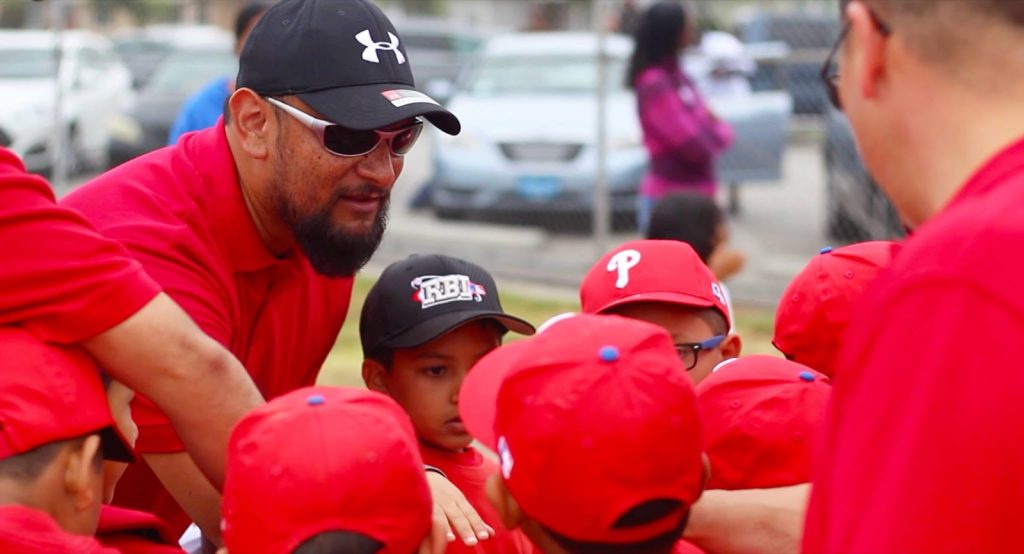
Coaches and team captains can use the huddle as a speaking drill. Ask a different player each day to give a two-sentence summary of what the team will focus on. In our free youth baseball and softball clinics (next season in planning), players practice communicating on the field alongside their skills.
Where can teens practice public speaking?
Teens improve fastest when they speak often in low-pressure places. Good places to start include:
- Class presentations, show-and-tell style updates and group projects.
- Speech and debate, drama, student government and school clubs.
- The team huddle, a pre-game talk or a post-practice recap.
- Family dinners, where a teen can share a short story or an opinion.
- Volunteering, where teens introduce themselves, give directions or explain a project. DITR signs community service hours for students who volunteer with us through our community service program.
- Leadership programs that include speaking practice.
If you are searching for public speaking for teens near me, a structured program can give teens feedback and a supportive group. DITR’s youth leadership program covers public speaking along with accountability, conflict resolution, team building and mental skills. You can compare options on our South Bay youth leadership programs page.
How can parents and coaches help a teen speak with confidence?
Adults help most by making practice safe and regular. A few habits make a big difference.
- Be a calm audience. Put the phone down and listen to the whole talk.
- Praise something specific, such as a strong opening or good eye contact, before giving one suggestion.
- Let the teen choose the topic sometimes. Speakers are more confident when they care about the subject.
- Do not finish their sentences or correct them in front of others.
- Celebrate effort. A teen who tried, even if it was shaky, has done the hard part.
- Help them handle nerves with the mental skills in our guide to mental skills for young athletes.
Speaking also helps when conflicts come up, because teens who can say what they mean calmly are better at working things out. See our guide to conflict resolution for teens.
Frequently asked questions
Should a teen memorize a speech or use notes?
For most talks, use short notes with key words, and know your opening and ending by heart. Memorizing every word makes it easy to freeze if you lose your place. Notes keep you on track and let you sound natural.
How do you stop saying um and like?
First, notice them by recording yourself. Then replace them with a short pause. A silent beat sounds confident, and it gives you time to think. Slower speech also cuts filler words. Expect them to fade over weeks of practice, not overnight.
What should I do if I forget what to say?
Pause, take a breath and look at your notes. Say the last point again or move to the next one. Audiences usually do not know what you meant to say, so a calm pause reads as thoughtful.
How do I answer a question I do not know?
Say, “That is a good question. I do not know yet, and I will find out.” It is honest and builds trust. You can also restate what you do know that is related, then offer to follow up.
How long should a teen practice each day?
Ten minutes of focused practice is enough to start. A short drill, like the 30-second introduction, done most days works better than one long session before a big talk.
Help a teen find their voice
See how DITR’s youth leadership program builds public speaking, accountability and teamwork, or get involved to support young people in the South Bay.